
Retrofits
Targeted upgrades that improve the performance, efficiency, and compliance of existing water and wastewater treatment systems. Without the cost or disruption of full replacement.
Extend Life. Improve Performance. Stay Compliant.
Water and wastewater treatment systems are built for long operational lives. But the standards they must meet, the conditions they operate in, and the demands placed on them change over time. A system installed a decade ago may no longer meet current discharge regulations, may be operating at higher energy costs than necessary, or may be unable to handle increased flow volumes without compromising output quality.
Full replacement is not always the right answer. In many cases, targeted retrofits deliver the performance improvements required at a fraction of the cost and with significantly less disruption to ongoing operations.
GWT’s retrofit service assesses existing systems, identifies the specific gaps between current and required performance, and engineers upgrade solutions that address those gaps directly. Whether the system was originally installed by GWT or by another supplier, our team has the technical capability to evaluate it and recommend the most effective and cost-efficient upgrade path.
When a Retrofit Is the Right Decision
Regulatory Standards Have Changed. Discharge and reuse standards in the UAE and across the MENA region continue to evolve. A system that was compliant at installation may no longer meet current requirements for effluent quality, reuse grade, or specific contaminant limits. A retrofit that adds or upgrades treatment stages can bring the system into alignment with revised standards without replacing the entire installation.
System Performance Has Declined Ageing equipment, worn components, and accumulated fouling reduce system output, increase energy consumption, and raise operational costs. Where the core infrastructure remains sound, targeted upgrades to key components restore performance to original design levels or better.
Capacity Needs Have Increased Project expansions, increased occupancy, or higher production volumes may require greater water supply or wastewater treatment capacity than the existing system was designed to handle. Retrofitting to increase hydraulic capacity or add parallel treatment stages is often faster and more cost-effective than building a new facility.
Energy Costs Are Too High Older RO systems in particular may be operating without energy recovery devices or with pump and motor configurations that were not optimised for current efficiency standards. Retrofitting energy recovery technology or replacing oversized or inefficient pumps reduces power consumption and lowers ongoing operational cost.
Control Systems Are Outdated Legacy control panels and instrumentation limit monitoring capability, complicate troubleshooting, and increase the risk of undetected process deviations. Upgrading to modern PLC-based control systems with real-time monitoring and SCADA integration improves operational visibility and reduces response time to system events.
Output Quality Does Not Meet Current Requirements Changes in source water quality, new product specifications, or stricter reuse standards may mean the existing system no longer produces water of the required quality. Adding or upgrading treatment stages addresses quality gaps without replacing the complete system.
What GWT Retrofits
GWT’s retrofit capability covers the full range of water and wastewater treatment technologies. Upgrade scope is defined by the specific performance gap identified during system assessment.
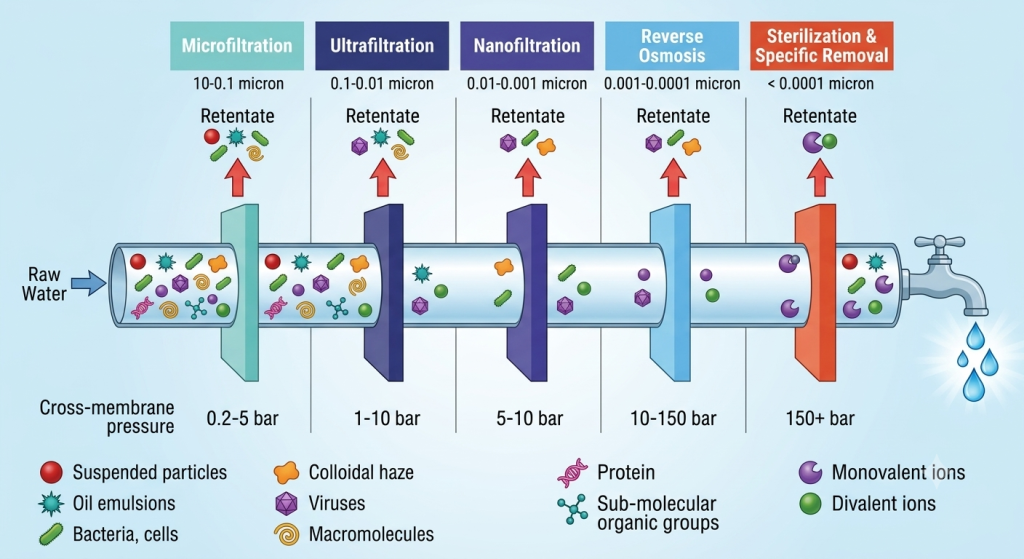
Membrane Upgrades: Replacement of existing RO, nanofiltration, or ultrafiltration membrane elements with higher rejection, higher flux, or fouling-resistant configurations. Applicable where output quality has declined, energy consumption has increased, or where source water conditions have changed since original installation.
Energy Recovery Integration: Addition of energy recovery devices to existing RO systems to reduce the energy consumed by high-pressure pumping. Particularly relevant for seawater RO systems where high operating pressures make energy recovery a significant factor in operational cost.
Pre-Treatment Upgrades Enhancement of existing pre-treatment stages or addition of new pre-treatment steps to reduce the fouling and scaling load on downstream membranes. Includes multimedia filtration upgrades, cartridge filter improvements, antiscalant dosing system additions, and coagulation and flocculation stage enhancements.
Post-Treatment Additions Integration of additional post-treatment stages to meet revised water quality or reuse standards. Includes UV disinfection, activated carbon filtration, remineralisation, and pH correction systems for potable water applications, and polishing stages for wastewater reuse applications.
Control System Upgrades: Replacement of legacy control panels with modern PLC-based systems. Integration of real-time monitoring instrumentation for flow, pressure, pH, turbidity, and conductivity. Addition of SCADA capability for remote access, performance logging, and alarm management. Upgrades are engineered to interface with existing process equipment without requiring full system replacement.
Capacity Expansion: Addition of parallel treatment trains, pressure vessels, or process stages to increase system throughput. Hydraulic and process design is reviewed to confirm that existing infrastructure can support the increased load before expansion works commence.
Pump and Motor Replacement: Replacement of oversized, inefficient, or end-of-life pumps and motors with correctly sized, energy-efficient alternatives. Reduces power consumption, improves flow control, and lowers maintenance frequency on critical rotating equipment.
Wastewater Treatment Stage Additions: Addition of biological, chemical, or tertiary treatment stages to existing STPs or ETPs to meet revised discharge or reuse standards. Applicable where effluent quality requirements have changed or where the existing system was originally designed for a lower treatment grade than currently required.
How GWT Approaches a Retrofit Project
System Assessment Every retrofit begins with a thorough assessment of the existing system. GWT’s engineers review current performance data, inspect key components, analyse source and product water quality, and identify the specific gaps between current and required performance.
Upgrade Recommendation Based on the assessment findings, GWT prepares a detailed upgrade recommendation that outlines the proposed scope, expected performance outcomes, estimated project timeline, and cost. The recommendation prioritises the most effective interventions for the client’s specific situation.
Engineering and Design Once the upgrade scope is confirmed, GWT’s engineering team develops the full technical design for the retrofit works, including process modifications, equipment specifications, civil and structural requirements, electrical and instrumentation changes, and control system updates.
Implementation Retrofit works are planned and sequenced to minimise disruption to ongoing operations wherever possible. GWT manages procurement, fabrication, installation, and testing of all upgrade components, with site safety and quality management maintained throughout.
Commissioning and Verification Following installation, the upgraded system is commissioned and performance verified against the targets established at the design stage. Operator training on any new equipment or control systems is provided before handover.
Why GWT for Retrofits
GWT has been engineering and maintaining water and wastewater treatment systems across the UAE and MENA since 1992. This depth of operational experience means our team understands how systems age, where performance gaps typically develop, and what interventions deliver the most reliable and cost-effective results.
GWT holds ISO 9001:2015 for Quality Management, ISO 14001:2015 for Environmental Management, and ISO 45001:2018 for Occupational Health and Safety. These standards apply to retrofit projects in the same way they apply to new installations, covering engineering design, fabrication, installation, and commissioning throughout.
Retrofit services are available for GWT-installed systems and for third-party systems where clients require independent technical assessment and upgrade delivery.
Frequently
Asked Questions
Quick answers to questions you may have. Can’t find what you’re looking for? Get in touch with us.
Yes. GWT's retrofit service is available for third-party systems. The process begins with a full system assessment to understand the existing configuration and identify the most appropriate upgrade scope.
Scope is determined through a detailed system assessment that reviews current performance data, component condition, source water quality, and the gap between current and required output. GWT then recommends the specific upgrades that address those gaps.
GWT plans retrofit works to minimise operational disruption wherever possible. In many cases, upgrades can be phased or sequenced to allow continued system operation during works. Shutdown requirements, where unavoidable, are agreed and planned with the client in advance.
Yes. GWT offers Operations and Maintenance Contracts and Annual Maintenance Contracts for ongoing support following retrofit completion. Spare parts and consumables supply is also available through GWT's aftermarket service.